Northeast Odyssey

Tripura or Twipra, the land of Maharajas, pretty palaces, lakes and temples is reminiscent of the grandeur of Rajasthan. Situated between Bangladesh and Mizoram, this small state is a land of exquisite natural beauty. Tripura is known for its hills, dales and lush valleys. A distinct aspect of the hill formations of Tripura is that they run parallel in a north-south pattern beyond the borders of Bangladesh. Its highest peak is the Betling Shiv (3200 ft) in the Jampui ranges. A rich tourist spot, the Jampui hills are also famous for its orange plantations; and every year it hosts the famous orange festival during December-January. The Eden tourist lodge and several other paying guest accommodations are available in the area. The Boromura hill ranges, which is the source of rivers like Saidra and Sumili that flow into Bangladesh is also known for its natural splendour.
Tripura has had a fabled past; and before joining India in 1949, this land was ruled for centuries by the Hindu royal dynasty of Manikyas. Though considered a part of British India in the days of the Raj – it still enjoyed the status of an independent administrative unit even then. When India became independent, the then Maharani of Tripura, signed an agreement of merger with the union. Tripura and finally gained complete statehood in 1972.
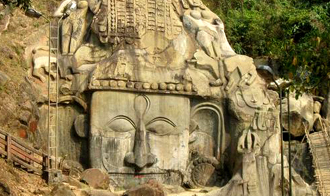
Just as its variegated culture and multi-hued ethnicity, the origin of the name Tripura has several fascinating legends associated with it. While the name finds mention in the Mahabharata; Hindu mythology attributes the name of Tripura to lord Shiva, who is also called Tripurari. The more common belief is that name directly refers to the presiding deity of the land, ‘Tripura shundari’- which has made the region one of the 51 Shakti peethas, or pilgrimage centres sacred to worshippers of Goddess Durga.
Historical and scholarly records suggest that the name directly refers to the land once known as ‘Tuipra’ – meaning a land adjoining the water. It is a known fact that in the past, the boundaries of the land of Tripura extended up to the Bay of Bengal. While ancient history points to the fact that the Tripuri tribe, also known as Tipras, literally meaning ‘water-god’ - had travelled from Central Asia around 8000 BC and settled in this region.
Though among the earliest settlers of the land were several other Mongoloid communities like the Noatias, Chakmas, Reangs, Jamatis and Halams – the old Tripuris were the predominant tribe. Later with the wave of Bengali immigrants coming in from Bangladesh, the region, and especially the old Tripuris witnessed a radical change in their social and cultural fabric. This resulted in the birth of the Natun Tripuris (literally ‘new Tripuris’), who adopted many Bengali customs, including the Bengali language. It is no surprise therefore, that Bengali is currently one of the major languages of the state apart from Kokborak.
Other known immigrants like the Mundas, Orangs and Santals have contributed to Tripura’s diverse cultural base as well – these people were brought into the state during the time of the monarchy, to work at tea plantations or the brick kiln factories. Each of these tribes has their distinct dances, songs and customs, which have been kept alive to this day.
Various customs and religious festivals enliven Tripura’s colourful cultural heritage. Prominent among these festivals is Bisu – the New Year festival held during March/April. On Bisu, young and old alike participate in religious ceremonies; and young girls and boys perform the Kherbai dance. Being a predominantly Hindu state, people worship several Hindu gods and goddesses during its biggest festivals. Garia (Lord Shiva); Mailu-Ma (lakshmi); Khulu-ma (goddess of cotton plant); the 14 Chaturdasha deities (mainly worshipped by the Manikya royals) and Tripura-Sundari, whose temple stands at the ancient city of Udaipur, 55 kms from Agartala. A unique custom of offering traditionally made alcohol during ceremonies is common in the state. The most popular and prized variety - the Mami ni Chuwak, beer fermented from rice, is offered to Lord Garia and to respected guests on special ceremonies.
Being an agriculturally oriented society, its harvest festivals like Mamita are also very colourful occasions. Held during October, farmers celebrate a good harvest season with the Mamita dance. On this day, traditionally the royal family sacrificed buffaloes to organise a grand feast.
Tripura’s unique wildlife can be best savoured at Siphajhola sanctuary – woodland with an artificial lake, here tourists can view over 150 species of birds and the bespectacled monkey, Phayre’s Langur, known locally as ‘Chosma Mwkhwra’. Other notable locations for wildlife include Shilghati, on the banks of river Gomati, 16 kms from Udaipur. Shilghati is known for its unique flora and fauna. A large variety of fish is found here. Also, the state’s valuable elephant herds can be seen in Kalajhari hills ranges.
Like Rajasthan, royal Tripura is best preserved in several places in the state. Kamalasagar, an artificial lake built by King Dhanya Manikya of Tripura in the 15th century - today it is a popular spot for picnickers as well. Neermahal or Water Palace, 53 kms from Agartala, instantly reminds one of Lake Pichola palace in Udaipur. Built by King Bir Bikram Kishore Debburman in 1930, this beautiful edifice, elegantly combines Hindu and Muslim architectural styles all standing firmly at the centre of lake Rudrasagar.
Tripuras handicrafts and handlooms occupy a distinct place in India’s heritage. Cane and bamboo artefacts and the light cotton weaves are well-known. Interestingly the rignai, the cloth used by women to wear as a wrap – has close to 300 design patterns, all crafted during the reign of Maharaj Trilochana.
Apart from the many private hotels in the capital city of Agartala, there are several good accommodations available at all tourist destinations of Tripura.
Sikkim is home to almost 200 monasteries or Gompas belonging to the Nyingma and Kagyu sect. Some monasteries like the Dubdi monastery in west Sikkim is considered the oldest monastery having been built in 1705. It is also home to some exotic orchids. It is said Sikkim has more than 6000 species of orchids.
A former royal kingdom, Sikkim has had a turbulent past owing to incessant raids and annexation threats from nearby kingdoms. Sikkim’s Coronation Book describes Guru Tashi (descendants of the Mi-nyak House of Kham in Eastern Tibetas) as the first ruler of Sikkim. Yet, it was not before 1642 AD, when Sikkim got its first Chogyal (king) Phuntsog Namgyal (the fifth generation descendant of the Mi-nyak house), who consolidated the fragmented territories. This event was preordained by the Buddhist sage Rinpoche, who had come to the region to spread Buddhism.
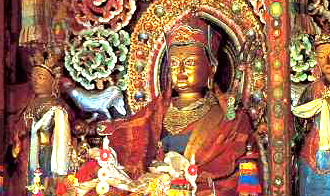
Over the next centuries the kingdom was attacked several times by Nepali, Bhutanese and Chinese raiders – and twelve generations of Chogyals ruled the region for over 300 years. In 1890 Sikkim became a British protectorate, owing to constant threats from Nepal, and later came under Indian suzerainty after 1947. With growing unpopularity of the Chogyals, the kingdom witnessed a tumultuous period which finally resulted in the 1975 referendum of Sikkim to join the Indian union.
Sikkim has experienced very diverse cultural influences – and today the land is inhabited by a varied mix of Bhutias, Nepalese, Lepchas, Gurungs, Sherpas, Limbus and several other immigrant communities like Biharis, Bengalis and Marwaris. Though largely followers of Buddhism, a number of people have adopted Christianity and Islam too. In Sikkim we can see a prevalence of Buddhist festivals like Drupka and Bhumchu. Also celebrated with much fervour is the Tibetan New Year, called Losar and Nepali festivals like Tihar and Bhimsen pujas.
A unique concept, as part of the state’s plan to retain and promote its diverse ethnic heritage, is the village home-stays – which give tourists an opportunity to savour their way of life. Such home-stays provide accommodation in the traditional homes, and also offer traditional meals; village trips and a taste of the culture and customs of the community, all first hand.
Sikkim’s kaleidoscopic history and heritage is best preserved at the many monuments and religious sites. The legendary Rumtek Monastery built in 1730 by the ninth Karmapa, which was later destroyed by fire and had to be rebuilt - now houses some of the world's most unique religious scriptures, manuscripts and religious artefacts. Several gompas and the striking Buddhist rock-caves like Laringvigphu and Pephu are also part of Sikkim’s unique cultural tradition.
Unlike the other verdant north -eastern states, rocky mountainous slopes and placid lakes define Sikkim’s topography. There are close to 30 prominent mountain peaks in the state - this also includes the third highest summit of Kanchendzonga bordering Sikkim; and others such as Talung, Narsing and Gocha La. An ideal spot to savour the awe-inspiring Himalayan ranges, Sikkim has also emerged as an ideal destination for adventure sports like camping, trekking, mountain biking and river rafting. 8 well-known passes which includes the famous Nathula and Jelepla, are used as important trade and transport routes between India and the surrounding countries. Popular among tourists – panoramic views of the sublime mountains can be savoured from these passes.
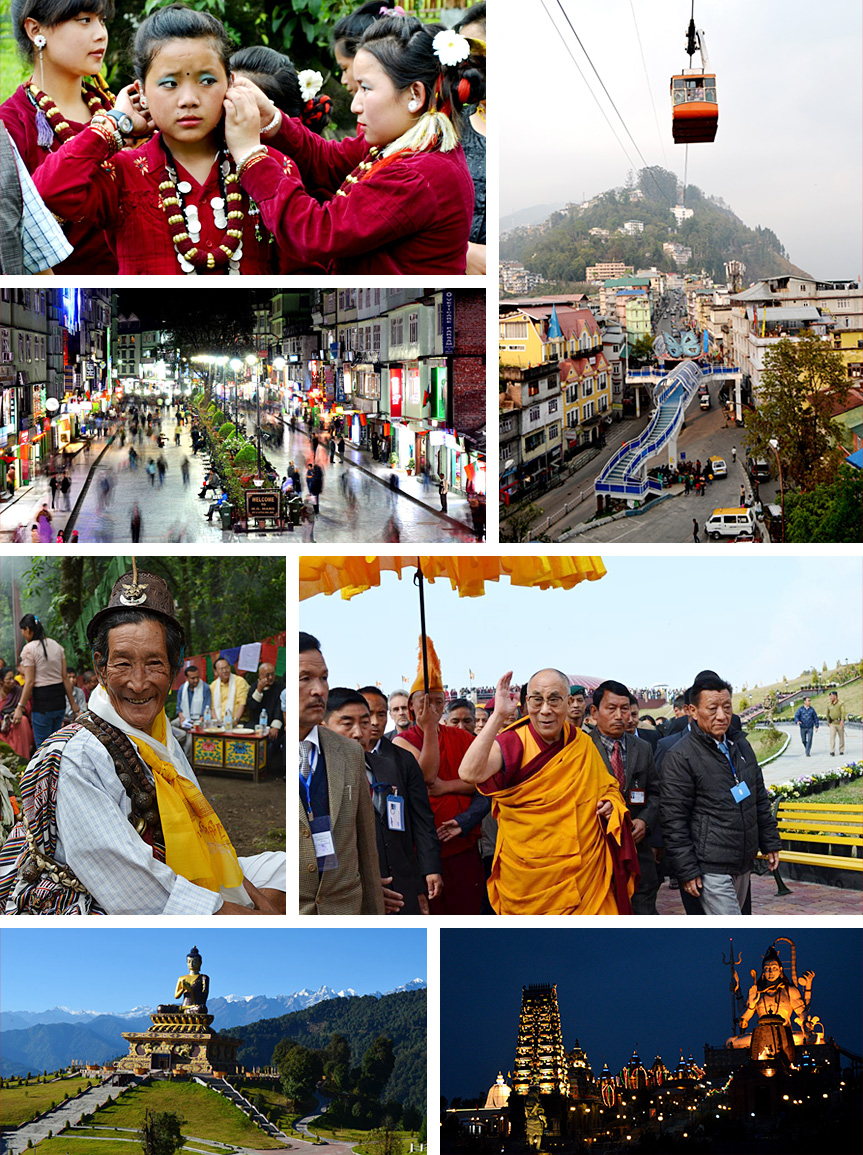
Sikkim’s rugged topography is further accentuated by the mountain glaciers - the Zemu glacier, the largest and the most famous glacier of the eastern Himalayas, is situated in a large U-shaped valley at the base of the Khangchendzonga massif in the northwest.
Surrounded by the majestic mountains and canopied under the azure skies are Sikkim’s lakes – calm and serene, their breathtaking beauty is to be savoured with the naked eye. Prominent among these are the Tsomgo (or Changu) at the Nathula highway, Tso Lhamu and the Menmecho lakes. Their frozen waters become the playing fields for many migratory birds during the harsh winter months.
The Teesta river, better known as Sikkim’s lifeline, which originates in the Cholamo lake, in the Himalayas – runs all along the state carving out natural river valleys on its course. Also strewn across its pristine landscapes are exotic hot springs like Yumthang and Purchachu; and the many bubbling waterfalls.
Only one third of Sikkim is green in the strict sense. Terraced farm fields of millet, maize tea and barley; subtropical broadleaf plants like maple, birches, magnolia and oak; alpine forests and around 5000 flowering plants contribute to Sikkim’s striking foliage. The orchid Dendrobium nobile, is the official flower of the state. Among the ecological hotspots of India, Sikkim is also home to a great variety of rare and endangered species like the red panda, snow leopard, Himalayan black bear, marbled cat, the Tibetan wolf and the barking deer.
Though covered in thick sheets of snow in winter, it’s not unusual to find tourists here during Christmas and New Year. The best time to savour Sikkim is during spring and summer.
Tourism being the biggest contributor to its economy – the state has all the necessary amenities and comforts to cater to a huge inflow of tourists.
The bustling town of Gangtok has a host of star and budget hotels to cater to every kind of traveller. These include Chumbi Residency, the Himalayan Retreat and Resort, Cherry Guest House, Bliss resort, Royal Plaza and Kewzing Home.
The vibrant hills of Nagaland are home to some of the most distinct tribes of India. This small state bordering Myanmar to the east became part of the Indian Union as its 16th state in 1963, after a long-standing fight for independence. The capital of the state is the bustling town of Kohima.
Covering a total area of 6401 sq miles, Nagaland’s topography is defined by long stretches of rugged mountains, which arise from the Brahmaputra valley in Assam at a height of 2000 ft. Among its many peaks, the picturesque mount Saramati at an elevation of 12,552 feet is the highest – this is also the location where the Naga Hills merges with the Patkai Hills bordering Myanmar. Shrouded by dense clouds mostly, this region gets a very high amount of rainfall all year round.
Several waterfalls and rivers drain into the valleys surrounding the hills. Nagaland’s rivers Doyang and Diphu to the north, the Barak river in the southwest and the Chindwin river of Burma in the southeast, crisscrosses through the entire length of the state. These rain-fed rivers provide enough water for this agricultural land which produces crops like rice, corn, pulses, potatoes, sugarcane and oilseeds. Approximately 90 per cent of Nagaland’s populace is involved in agriculture.
By far the most striking feature of Nagaland is its tribes. Primarily belonging to the Indo-Mongoloid stock of people, each community is distinct from the other in terms of customs, culture and language. There are 16 major tribes who inhabit these regions – like Angami, Ao, Sema, Rengma, Sangtam, Chakasang, Konyak, Lotha and Moatsu among others. Fiercely loyal towards the clan and traditions, the Nagas originally had political and socio-economic links to tribes of Burma. They represent an egalitarian society where there is no system of caste or class. Young girls and boys have wide freedom of interaction before marriage, the only restriction being a strict ban on marrying within one’s gotra or totem.
Customs related to agriculture and war are interwoven into the Naga cultural fabric – through most of their song and dance sequences Nagas try to propitiate the natural forces for a good harvest or for safeguard against any disaster or natural calamities. The festival season for each tribe is a time for joyous celebrations. And the Nagas loosen their purse strings during festival and ensure they have grand feasts. Hospitable by nature, Nagas take it upon themselves to entertain guests and visitors to their home to make sure at least they share a meal.
The Angami festival of SekrenyI in the month of February is an occasion to pray for the health and welfare of the whole community.
The Ao tribe observe Moastsu Mong for three days in the month of May after completing sowing. 'Sangpangtu' is one of the symbolic celebrations of this festival – on this occasion men and women sit around a bonfire.
Another festival of Aos is the Tsungrem Mong celebrated in the month August. During this festival village youths showcase their intellectual and physical prowess through various games and activities.
Festival of Chakhesang: This community celebrates seven festivals through the entire year – these are Suhkruhnye, the most important festival of this clan is held in January; NGUNYE – in February; Tsakronye – March; Tsukhanye – May; Khuthonye - July; Turhinye – August; Thurinye / Khiluvatu - December.
Changs observe six major festivals annually namely Poang Lem, Jeinyu Lem, Kudang Lem (by Haongang community), Moung Lem, Naknyu Lem and Monyu Lem.
Sankarni is the most important festival of Zemis, held sometime in February. During this week long festival alcohol is widely consumed by the tribe.
The Sumis celebrate a post harvest festival called AHUNA; and the TULUNI, another festival that is celebrated in mid July. On this occasion people drink the Tulini, a rice beer.
Traditional crafts of Nagaland is any shopper’s delight. Passed down by several generations the tribal handloom, pottery, bamboo and cane artefacts, weaving and dyeing and woodcarving are considered formidable art forms of India.
A culturally vibrant society, Mizoram is home to the famous bamboo dance. The Mizos are a talented lot who take to music naturally. They are strikingly westernised and with the highest literacy rate in the state in India averaging almost 95 per cent, English is widely spoken making it easy for tourists and outsiders.
Mizos have firm religious beliefs and are fun-loving. Peep into their festive calendar that wears a colourful hue throughout the year. All activities related to jhum farming culminate in several agricultural festivals like Mim Kut; Chapchar Kut, and Pawl Kut, held between September and March.
Like its traditional music, the different dances of the region have their unique flavour too – there are performances, which commemorate a successful harvest, like the popular Chailam, which is performed during Chapchar Kut; or traditional dances like Sarlamkai and Khuallam, that are associated with war and glory. Accompaniments like bamboo, drums, cymbals, gongs as well as clapping of hands, produce their distinctive beats and rhythms to which dancers match their movements.
Mizoram is the 23rd state of the Indian Union and the state gained complete statehood in February 1987. This beautiful mountainous region, sharing an international border with Myanmar and Bangladesh covers an area of 21,087 sq kms.
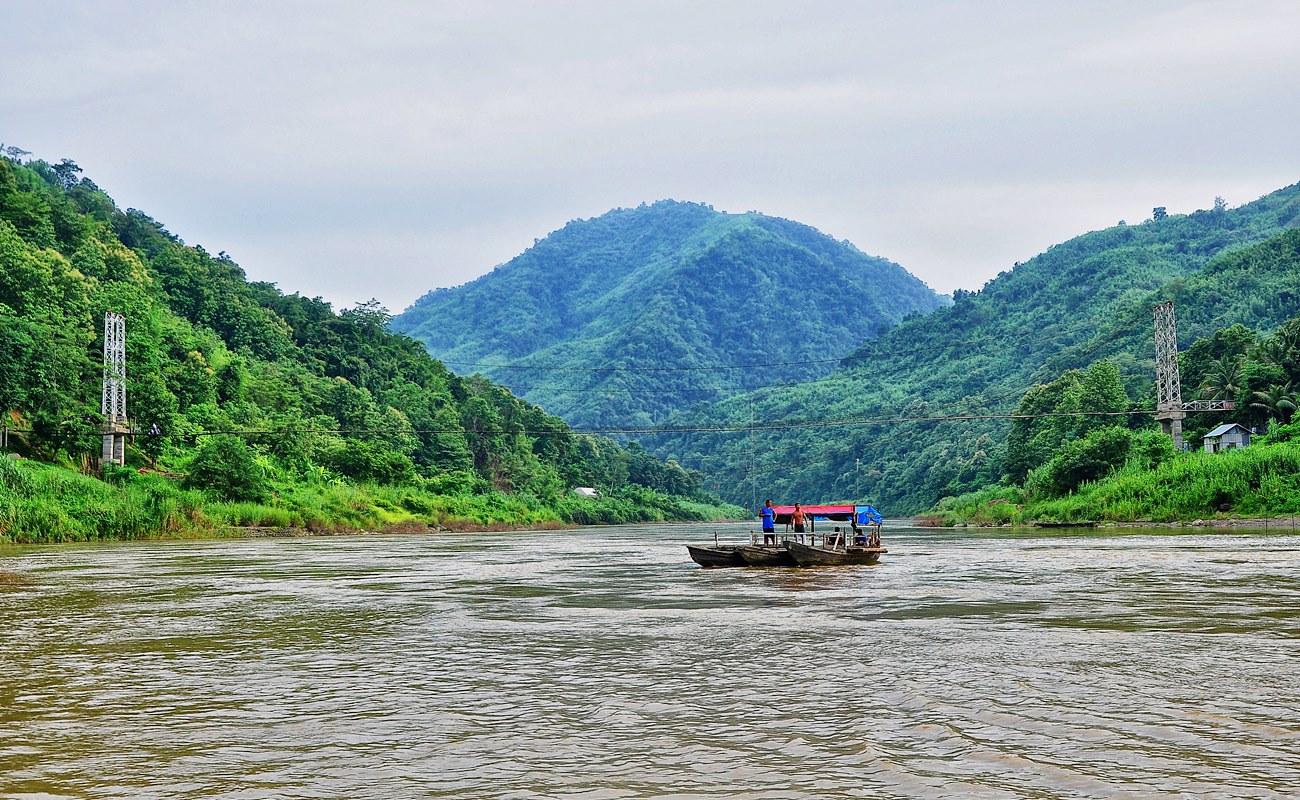
Mizoram is a beautiful mountainous region where the topography is defined by rugged hills and plunging gorges with gushing rivers flowing down them. Blessed with ample rainfall, Mizoram’s luxuriant landscapes are characteristic of tropical forests enriched with a variety of flora and fauna, including vast stretches of bamboo forests
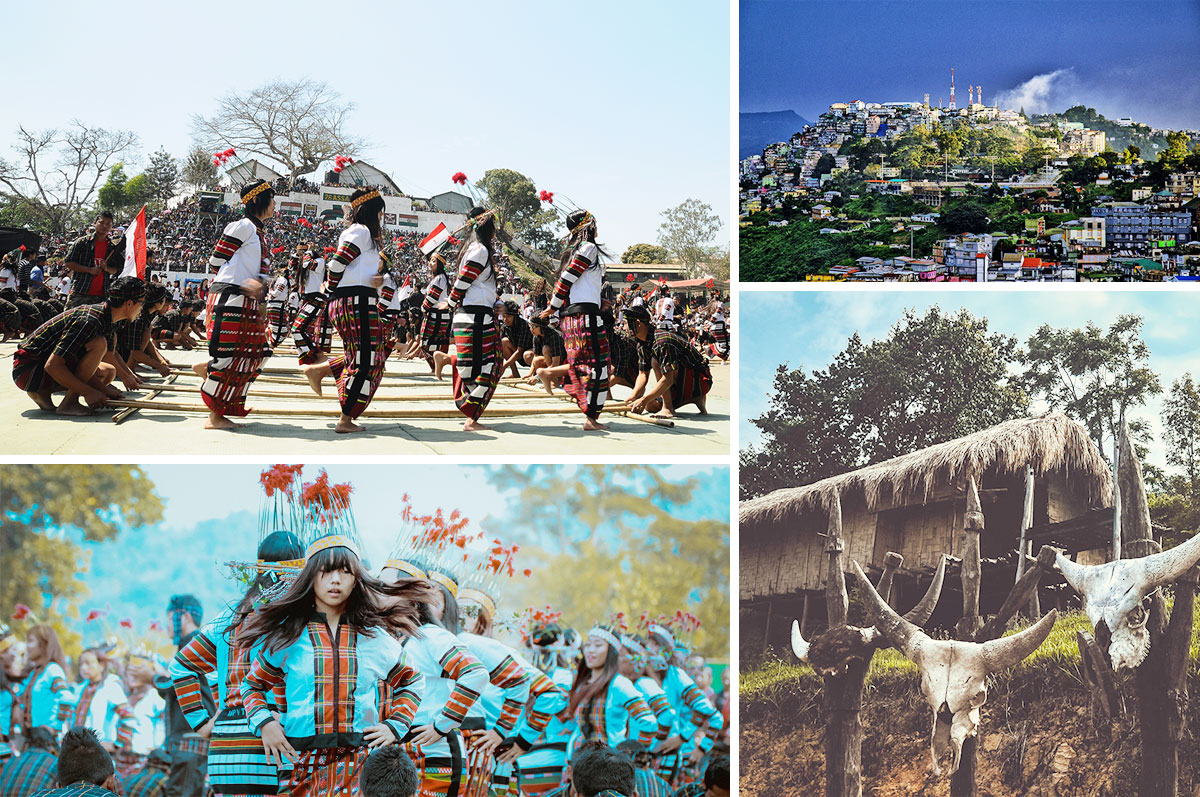
Mizoram’s topography is defined by rugged hills and plunging gorges with gushing rivers flowing down them. Blessed with ample rainfall, Mizoram’s luxuriant landscapes are characteristic of tropical forests enriched with a variety of flora and fauna, including vast stretches of bamboo forests
There are over 21 major hills in Mizoram, among which the 'Phawngpui (Blue Mountain) towering at 2,065 metres, is the highest. An interesting facet about Mizoram’s major rivers is that they either flow in a north or south direction. Tlawng (also known as Dhaleswari or Katakhal), Tut (Gutur), Tuivawl and Tuirial (Sonai) flow through the northern territory and eventually join river Barak in Cachar. The Western part is drained by river Karnaphuli (Khawthlang tuipui); while southern Mizoram is fed by river Koldoyne (Chhimtuipui), which originates in Myanmar.
Several lakes are strewn across the state as well – these include Palak, Tamdil, Rungdil; and Rengdil, which are all prime tourist destinations of the state. The birth of lake Palak is steeped in local myths – it is believed that it was created as a result of an earthquake or a flood; and a village, which was submerged during the floods, still remains under the waters to this day. Covering an area of 30 Ha, Palak is situated in Chhimtuipui District in southern Mizoram.
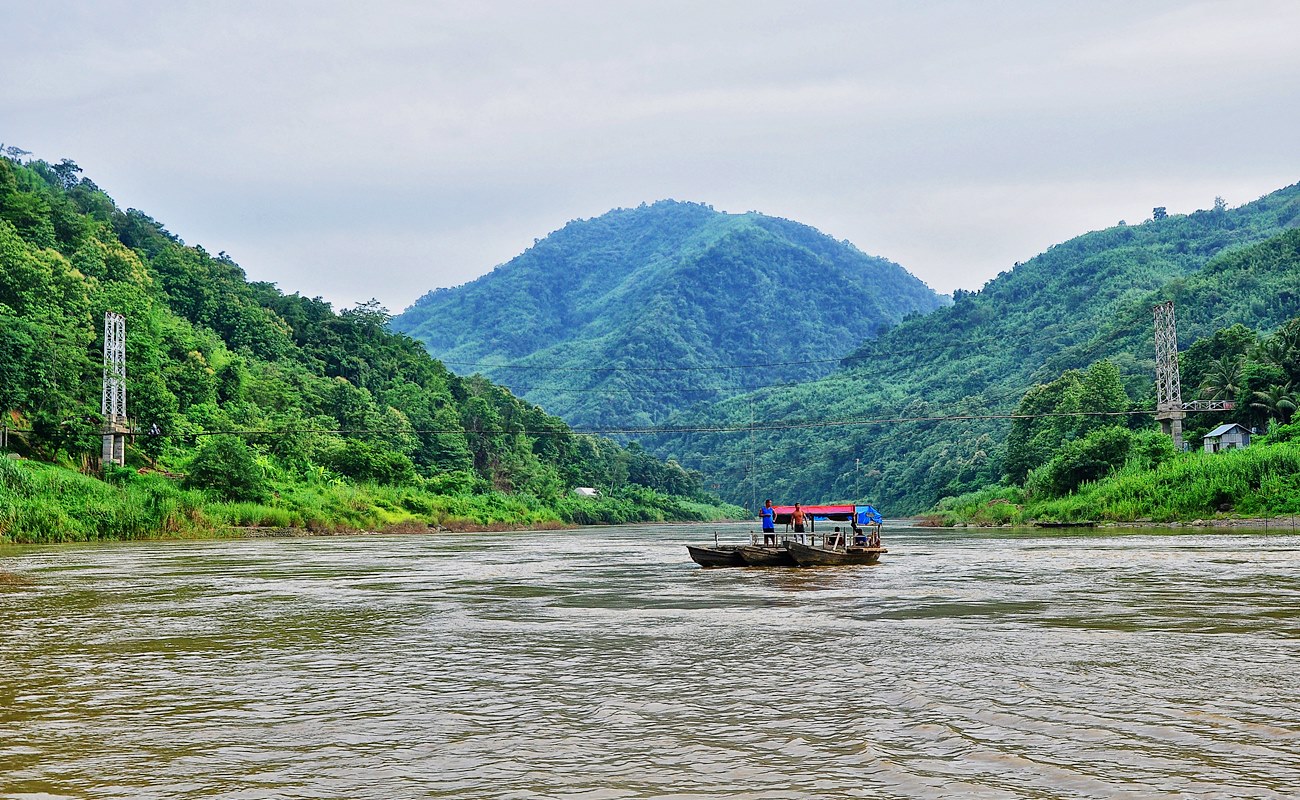
Tamdil, situated 110 kms from Aizawl, has a fascinating tale associated with its origin as well. Legend has it that the mustard plant which stood here centuries ago, was cut off, and this resulted in water spraying out from beneath forming a lake – thus the name Tamdil, which means ‘lake of mustard plant’.
Like many other north-eastern people, Mizos (Mi and Zo translated literally mean hill people), are generally accepted as being of Mongoloid decent. Ethnically, Mizos are collectively known as Lushais or Luseis, literally meaning ‘long headed people’.
Around the 7th century their sojourn took them to western Burma – here they came under the influence of Christian missionaries who infused several changes in their social fabric, including introduction of formal education and the Roman script for the Mizo language. It is no surprise therefore that literacy rates in the state are highest in India, averaging 95% almost. As an influence of the church and western lifestyles, English is a widely spoken language throughout the state.
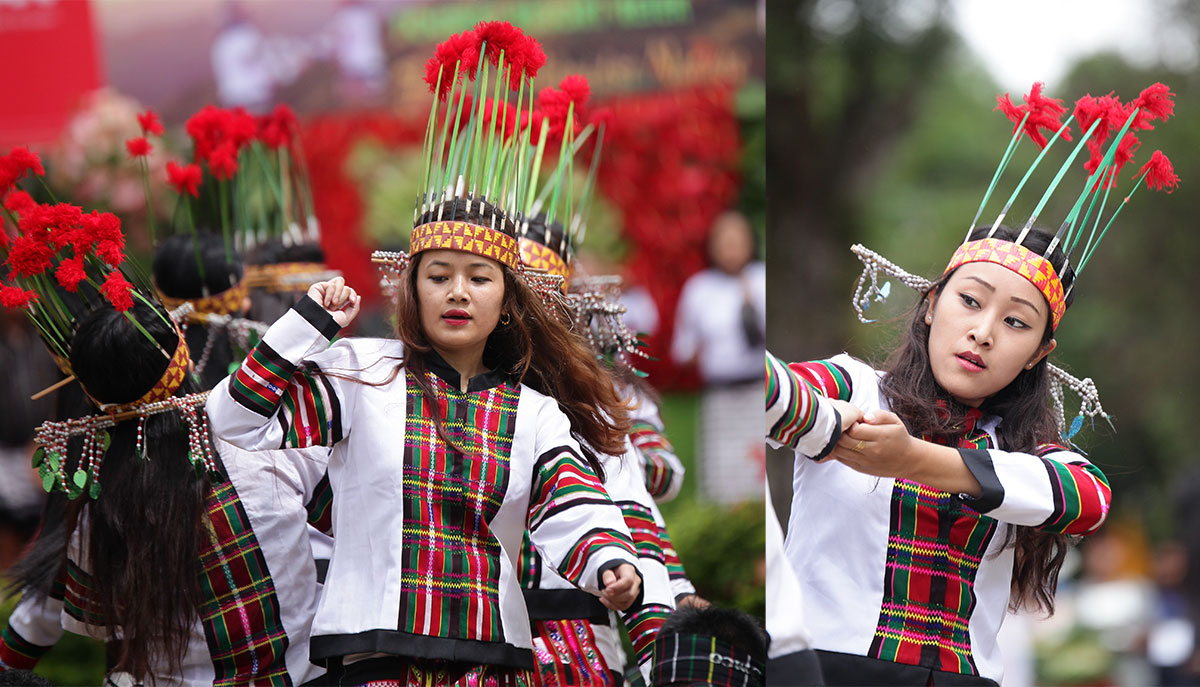
Considered as extremely polite and friendly people, the Mizo society is closely knit. The entire village is considered like a big family that partakes in all kinds of ceremonies together. Though the influence of Christian missionaries has made them more liberal and democratic in their mindsets, Mizos still value the traditional ideology of ‘Tlawmngaihna’, where every member of their society is supposed to selflessly serve others.
Traditionally involved in farming, especially jhum cultivation– young Mizo men were trained at the village Zawlbuk, to eventually become responsible citizens. Today’s young generation is however involved in newer professions including music. Lately the state has seen a profusion of rock bands and is also popular for the genre of gospel music.
The state is also home to various tribes like Maras, Hmar, Paites and Lais. Other groups like the Riang, a sub-tribe of Tripuri and Chakma origin also inhabit here.
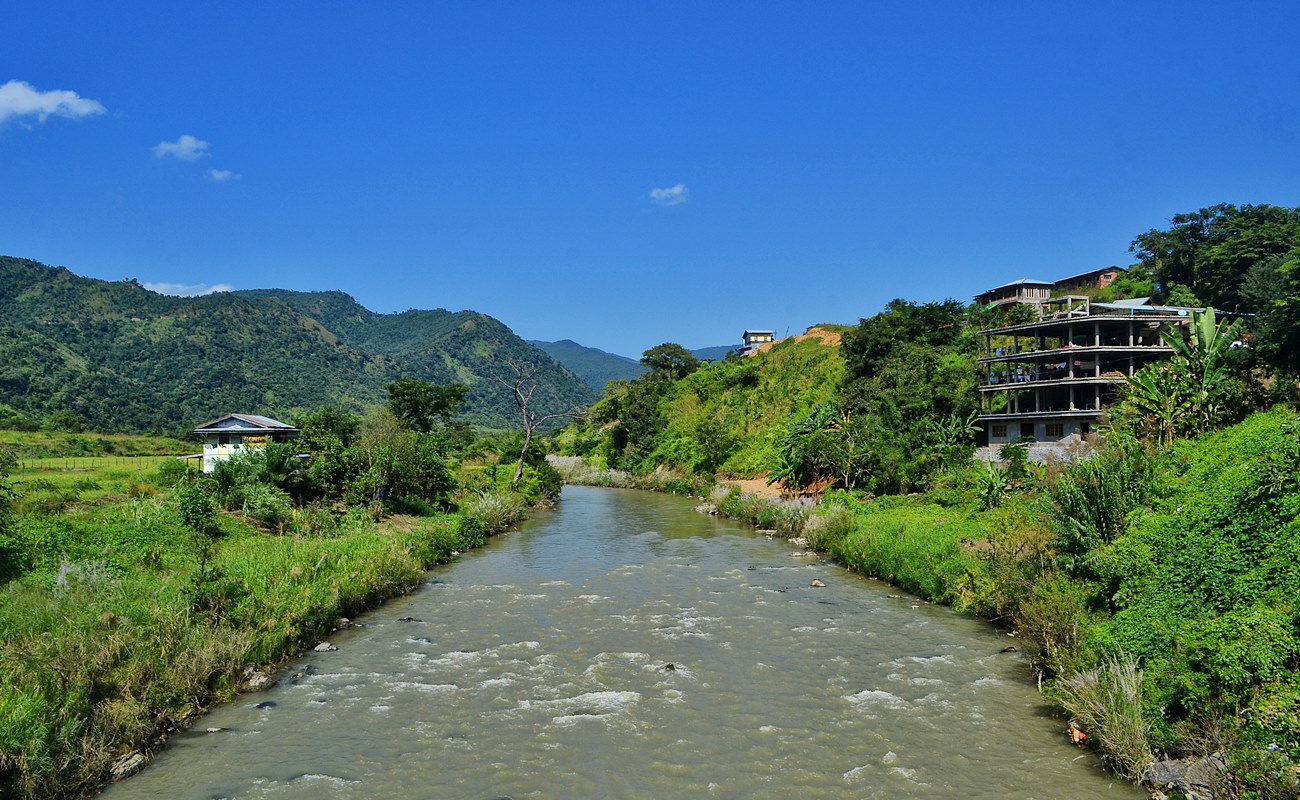
The land of cascading waterfalls, intriguing caves, rolling plans and incessant rains – Meghalaya, literally meaning the ‘abode of clouds’, is home to the legendary Garo, Khasi and Jaintia tribes. Formerly a part of Assam, it gained statehood as part of the Indian Union in 1972. Spread over an area of 22, 429 square kilometres, the state is bounded by Assam to the north and Bangladesh to the west.
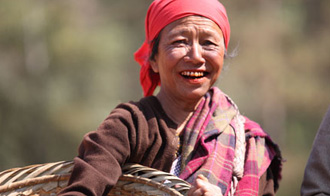
A much loved destination for writers and music lovers alike, the capital city, Shillong, is where Nobel laureate Rabindranath Tagore chose for his many sojourns, while author Nirad C Choudhuri mentioned extensively in his book The Autobiography of an Unknown Indian’. In fact, today, Shillong is the music capital of Northeast with many home-grown singers and rock bands making it a lively state. It has hosted some of the major rock concerts held in the recent past by international groups and artistes like MLTR, Scorpions, Air Supply, Eric Martin and Petra. It is also home to one of the most natural and largest courses in Asia, the Gleneagles of the East.
Some of the earliest group of ethnic settlers in the Indian subcontinent – the Garo, Khasi and Jaintias settled in eastern Meghalaya centuries ago. Together these communities make up, what is known as the Hynniewtrep people - belonging to the Proto Austroloid Monkhmer race. Known as cheerful and hospitable people - the common distinguishing factor among these groups is their tradition of matrilineal system of society, where the family lineage is attributed to the mother’s side. It is worth noting that around 73% of people of the state have shown an inclination to beget a girl child – much higher than the national average; and in a nation where having a male heir is still considered a boon.
God fearing and simple, a host of distinct customs define their social and religious characters. Khasis believe in the existence of one supreme God, their creator 'U Blei Nongthaw'; while Garos call their supreme entity Raguba. Belief in good and ominous spirits is very common among these tribes, and forms part of certain religious customs -like appeasing these spirits for better harvest or a good rainfall. Though largely followers of such animistic forms of religion – a number of these communities have now adopted Hinduism Islam or Christianity as well.
The festival calendar of Meghalaya is primarily dominated by the colourful celebrations of these communities.
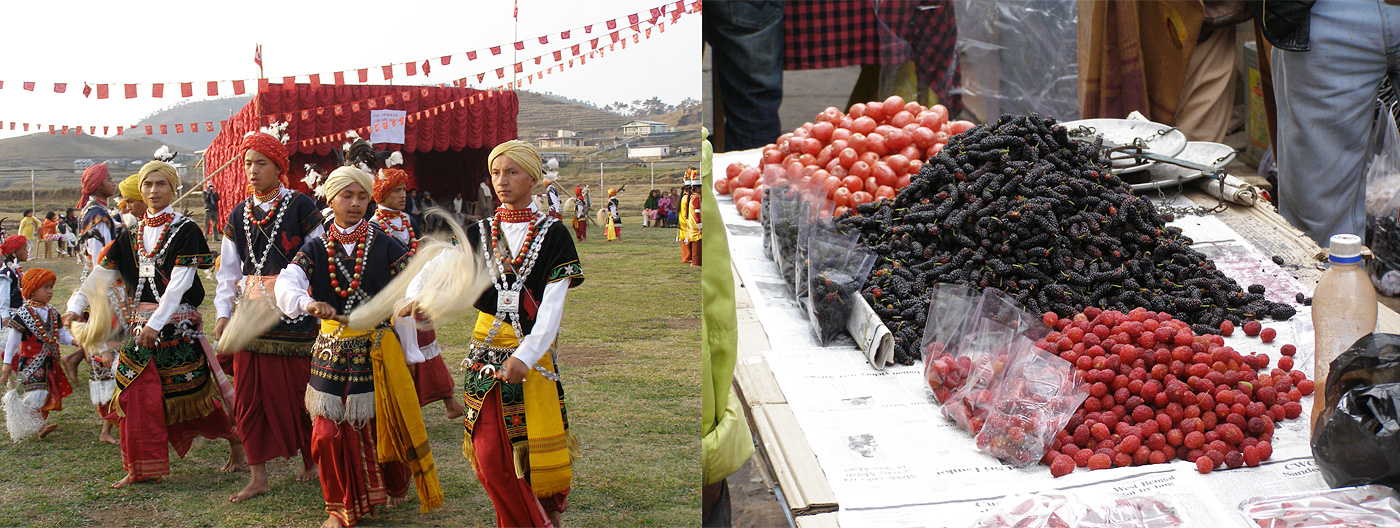
Among the Khasis, the annual Nongkrem Dance held at Smit (every autumn) associated with goat sacrifice, is held with much pomp and gaiety. The ritual involves a traditional dance performed is by the Syiem, the head of the Khasi state, and Ka Syiem Sad, the Syiem priestess (considered caretakers of all religious ceremonies); and the ministers and the common people.
The Garo Hills come alive to the beat of the nagara (drums) every November when the community partakes in a post-harvest festival called Wangala. On the occasion Garos thank their god of fertility, Misi-A-Gilpa-Saljong-Galapa. The highlight of the festival is a performance by 300 dancers and 100 drumbeaters who descend on the field in their fineries.
A three-day long festival of the Jaintias, known as Behdeinkhlam is held to drive away evil spirits with waving of sticks and the beating of drums. Also, the Pnar people hold the annual Chad Sukra, meaning sowing festival, between April and May every year.
Various other festivals like the autumn festival, the strawberry and Ranikor festivals draw large crowds from various parts of the state, as well many international tourists. Other groups like the Rabha, Mikir, Koch and Nepalis have their unique cultural events as well.
The entire Meghalaya plateau region is made of rich rock formations, which are a great storehouse of natural minerals like coal, limestone, uranium. The Garo, Khasi and Jaintia hills are a part of this region itself. Several rivers, deep gorges and forests define this hill region. The central part of the plateau comprising the Khasi Hills has the highest elevations – Shillong Peak is its highest point; while the highest point in the Garo hills is the Nokrek Peak at an altitude of 1515 m. The town of Cherapunji, a famous tourist destination, in the Khasi Hills, holds the world record for the highest rainfall in a month.
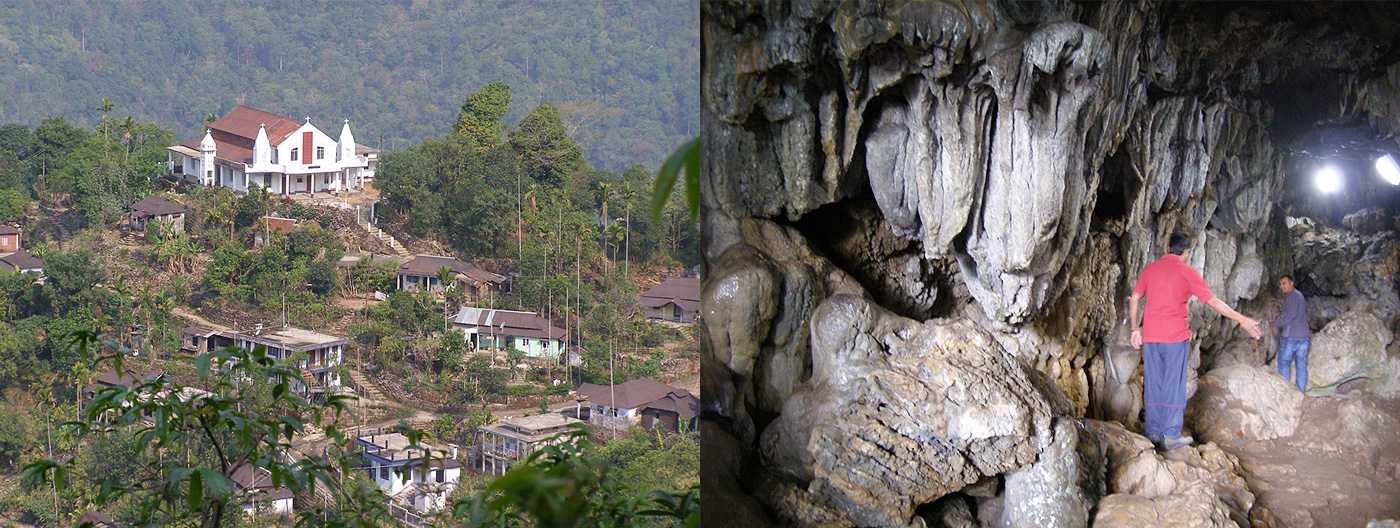
Rain awashed Meghalaya is a nature’s paradise – approximately 42. 34% of the total area of the state is forested. These sub-tropical forests have some of the richest faunal diversity and botanical habitats in Asia; and offer rich opportunities for eco-tourism as well.
It’s ancient forests or ‘sacred groves’ have been preserved for centuries by its indigenous people – an ideal destination for nature worshippers, these areas harbour some of the rarest species of plants and flowers. Generally rimmed by a dense growth of Castanopsis kurzii trees, the areas inside is loaded with varieties of aroids, pipers, ferns, fern-allies and orchids. The Mawphlang sacred forest in the east Khasi hills is a prominent sacred grove here.

Meghalaya has been gifted with stunning natural wonders. Where else would you find caves with such depth and length, as we do here? Owing to the climate, we have the best wines which are not known to outsiders.
The cleanest village in Asia, Mawlynnong, about 100 kms from Shillong, is our pride. I would urge every visitor to go and not just see, but to also come back with the inspiration to keep their own respective backyards clean.
Shillong is a hawker’s paradise. All through the streets- be it in Laban, Police Bazar and Laitumkhrah, locals sell fresh produce like fruits and exotic vegetables.
It’s such a delight to see how much of what grows in our soil is being exhibited. Try and reach there in the morning, to witness the buzz and spirit of the place.
When it comes to restaurants, one can find quite a few good ones in Shillong that are definitely outstanding. There’s a notable focus on organic produce and the countryside – a possible testament to the local’s love for good quality food. I would recommend local food and Shillong-style Chinese cuisine.
Plan your trip to coincide with the annual celebration of Bob Dylan's birth anniversary. Come and be a part of the musical fiesta on 24th May every year – we have live gigs, and the mood is more than just musical. The experience is epic since I first started in 1972!
Lou Majaw
Do you know that the game of polo originated in Manipur? Later the British soldiers and planters took the game back to England and modified it and popularized it around the world. Once a princely state, Manipur is seeped in history. It came under the British rule after the defeat in the historic Anglo-Manipuri war in 1891 where a war broke out between two allies, the British and the Manipuris after a strained relationship developed between the two parties on account of the murder of five British officers. During World War II, Imphal was occupied by the Japanese soldiers. After Independence it was merged in the Indian union on October 15th 1949 and subsequently became a full-fledged state of India on 21st January 1972.
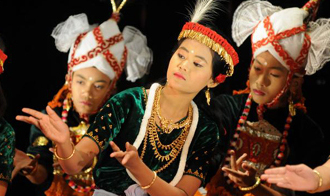
The locals lovingly call Manipur “sana leibak” meaning land of gold. And rightly so, it is surrounded by ranges of hills and forests laded with nagesar, jurul, Indian rubber, tan, oak, ash, teak and palm on all sides and streams and lakes that are filled with lotus flowers. It is home to the brow-antlered deer or sangai, exotic orchids with over 500 varieties of them and exquisite natural beauty. No wonder the Pandit Jawaharlal Nehru, the first first Prime Minister of India paid a fitting tribute by describing it as "Jewel of India". Lord Irwin, the then Indian Viceroy who held office from April 1926 till 1931, called Manipur “The Switzerland of India.”
Manipur is bordered in the north by Nagaland, Mizoram in the south, upper Myanmar in the east as well as in the south and Assam in the west. Hill ranges from all sides surround the valley portion of the state.
A multi-cultural society with more than 29 different dialects spoken by several tribes and sub-groups Manipur is also home to other prominent communities residing in the state, who came here as migrants from other Indian states prominently include Marwaris, Bengalis, Biharis and Punjabis. Almost like a mini India, the different communities live together in harmony. Manipur is also a culturally evolved and a progressive society where theatre and fine arts are pursued with the same zeal as they would any other profession.
The overall literacy rate is 68.87 per cent. The state has produced international sportspersons like gold medalist boxer Dinkho Singh and Mary Kim and weightlifter Kunjarani Devi among others.
The sound of cymbals and drums fill its pristine skies; the picturesque landscapes come alive to the sway and swirl of raas-lila; and miles of undulating wilderness is caressed by silver clouds – welcome to Manipur – the jewelled land of the northeast.
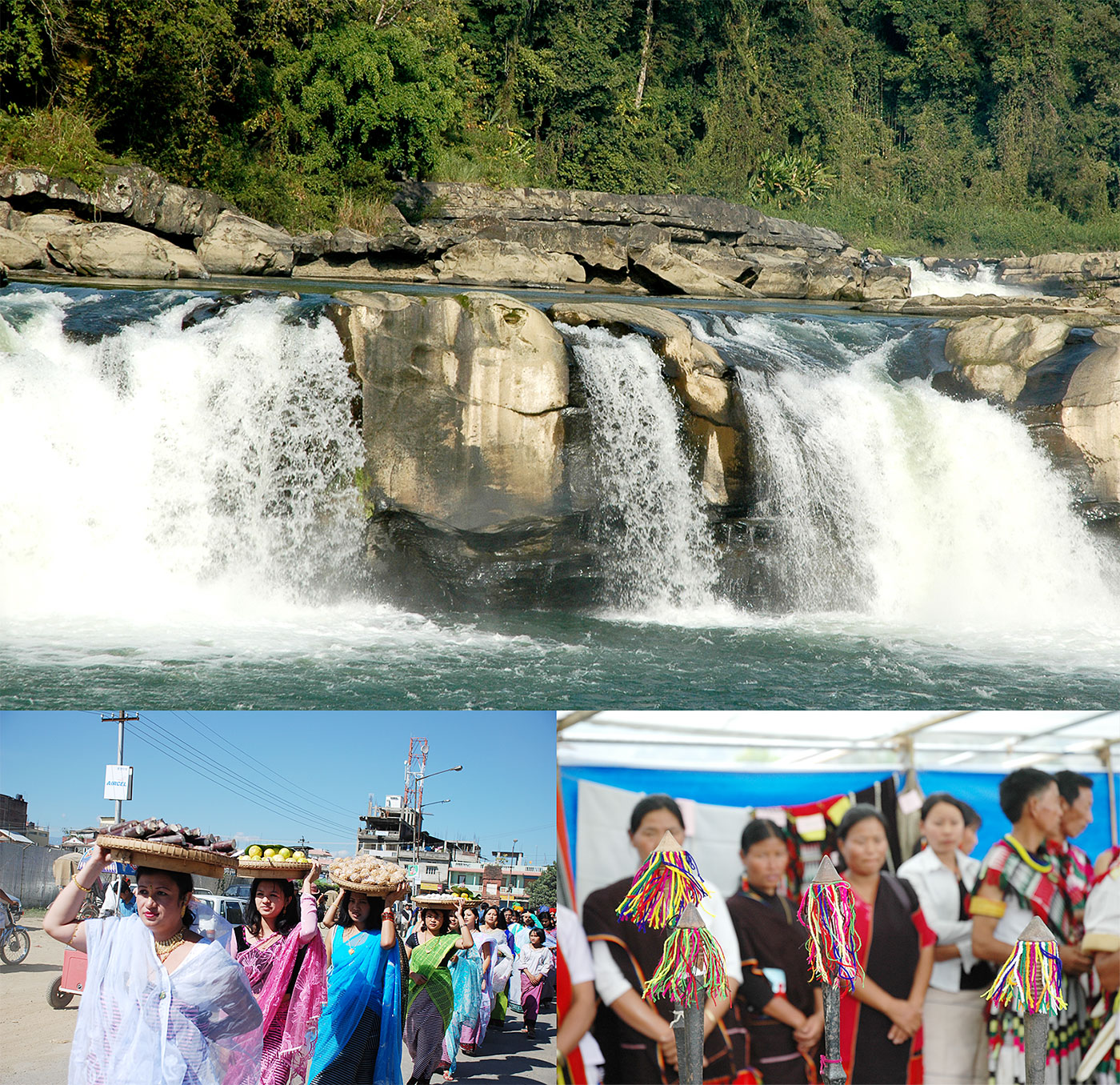
Some records suggest that the ancient rulers from China’s Qi clan ruled this region for long. Later historical evidences show that several Tibeto-Burmese groups thronged the area as well, and from these emerged the kingdom of Meitei -- whose recorded history dates them back to 33 AD. While several other tribes like kukis, nagas and caccharis tried to build their dominance over the land, the Meitei kingdom survived until Burmese generals invaded the region. In 1891 Manipur came under British rule, and survived as a princely state until 1947, afterwhich it was merged with the Indian Union on October 15,1949. It gained complete statehood as part of the Indian republic in 1972.
Apart from the Nagas, Kukis, Marings and Zomis, who constitute about 34 per cent of the Christian population of the state, there are the Bhamons or Manipuri Brahmins and Pangans or Manipuri Muslims living here as well. Large sections are followers of Vaishnavism too. Interestingly Sanamahism, the oldest practised faith of the state, is a Meitei form of religion, which believes in the worship of the Sun God. Sanamahism still has left its traces on the Hindu rituals today’s Manipuris follow.
Manipur’s joyous festival calendar too is steeped in ancient traditions and customs. Yaoshang, Manipur’s biggest festival held around February, is its premier celebration. Ningol Chakouba, a social festival in honour of the Metei women or Ningols is held annually in November. Incidentally, women enjoy a very respectable position in Manipuri society. The Manipuri New Year or Cheiraoba, too is held with much pomp and gaiety on the first day of the Meitei lunar calendar.
About 34 per cent of Manipur’s population is Christian. So Christmas is thus a very important festival in the Manipuri religious calendar.
The several art and dance forms of Manipur are devotional in nature – where performers pay their respects to the legends of the gods and goddesses. The Khamba Thoibi dance, for example is a veneration of the sylvan deity; the Pung Cholom, performance on the Manipuri mrindangam, is a vital part preceding the raas-lila and other religious ceremonies; while the Maibi dance, is a ritualistic performance that traces the history of creation. The Nupa Pala or the Cymbal Dance is another characteristic Manipuri style performance – it is a recital by male artistes wearing large white headdresses. Besides, the different tribes have their traditional dances.
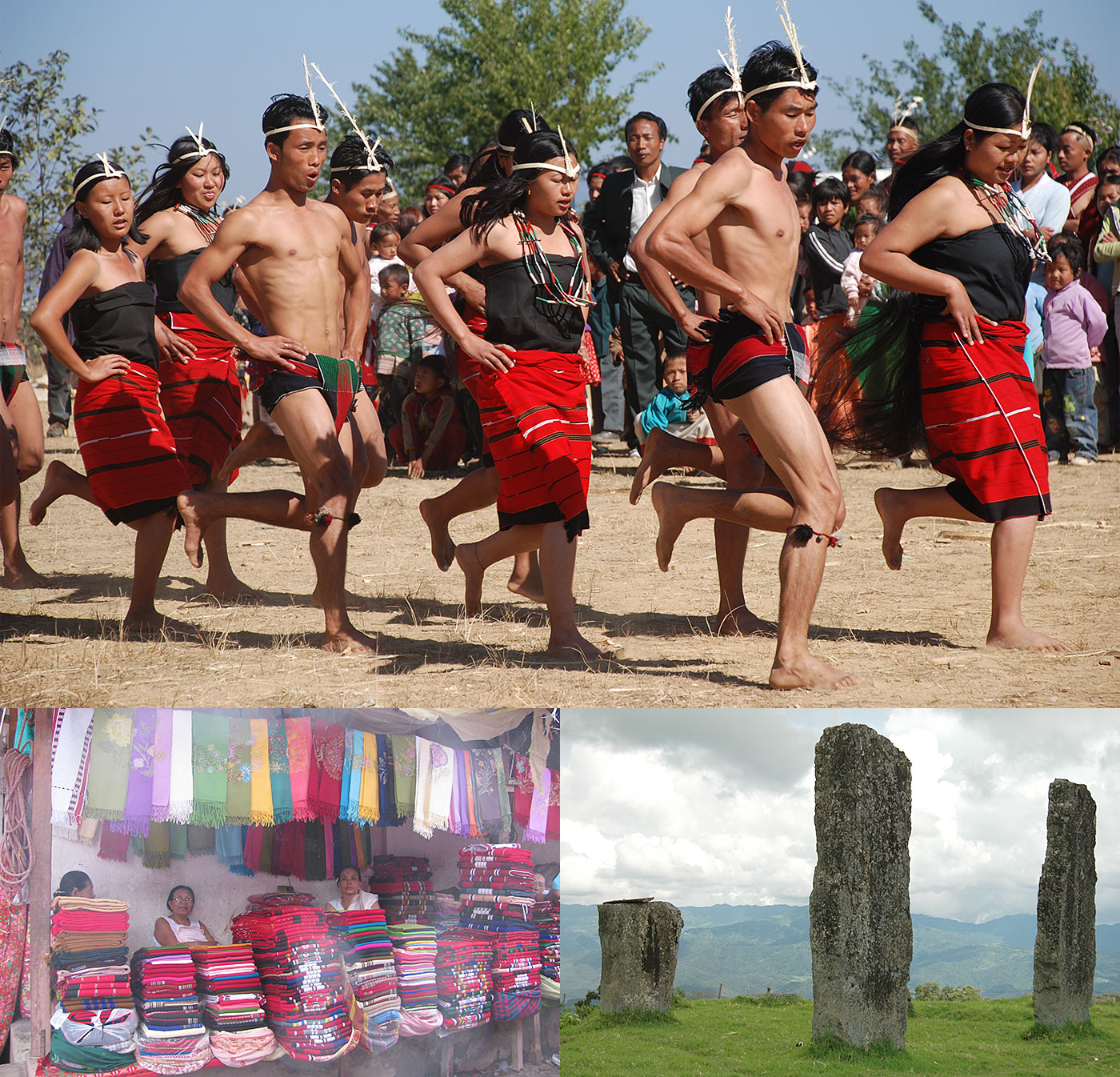
Vaishnavism, which spread its influence in the state in the early part of the 15th century, has left vast imprints on Manipuri art and culture. The celebrated Manipuri-style raas-lila, which pays homage to the legend of Lord Krishna and his beloved Radha – is one of the most acclaimed classical dance forms of India.
Several wrestling and martial arts forms exist in Manipur – these evolved during the ancient clan or tribal warfare, when it was imperative for warriors to hone their battle craft. The game of polo, known locally as Sagol Kangjei, originated in the heydays of Meitei dominance. The Manipuri martial-art form of thang-ta too was developed during the Meitei reign. Mukhna or Manipuri wrestling, Yubi Lakpi or coconut rugby or the Oolaobi, as practised today – are several strenuous games, which put to test a player’s mental and physical agility.
About 67 per cent of Manipur’s land is covered with the sub-Himalayan forested hills. Interestingly the state has a uniquely fascinating topography – an oval-shaped valley in the centre surrounded by an outer-lying area of rugged hills. Depending upon the altitude, the vegetation varies from tropical semi-evergreen to pines and moist deciduous. This striking variation of flora includes pines, bamboos, teak, oak, and types of reeds; huge rubber, cardamom and coffee plantations; and vast tracts of emerald paddy fields as well. A pleasant summer with sufficient rains and a broad network of rivers and lakes keeps its soil rich.
Almost a state symbol of sorts, are Manipur’s orchids of exotic colours and shapes. Found in abundance throughout the state, it is believed that the region offers around 500 varieties of this precious bloom. The rare ‘Siroi lily’, the only terrestrial variety of the orchid is found atop the Siroi Hills.
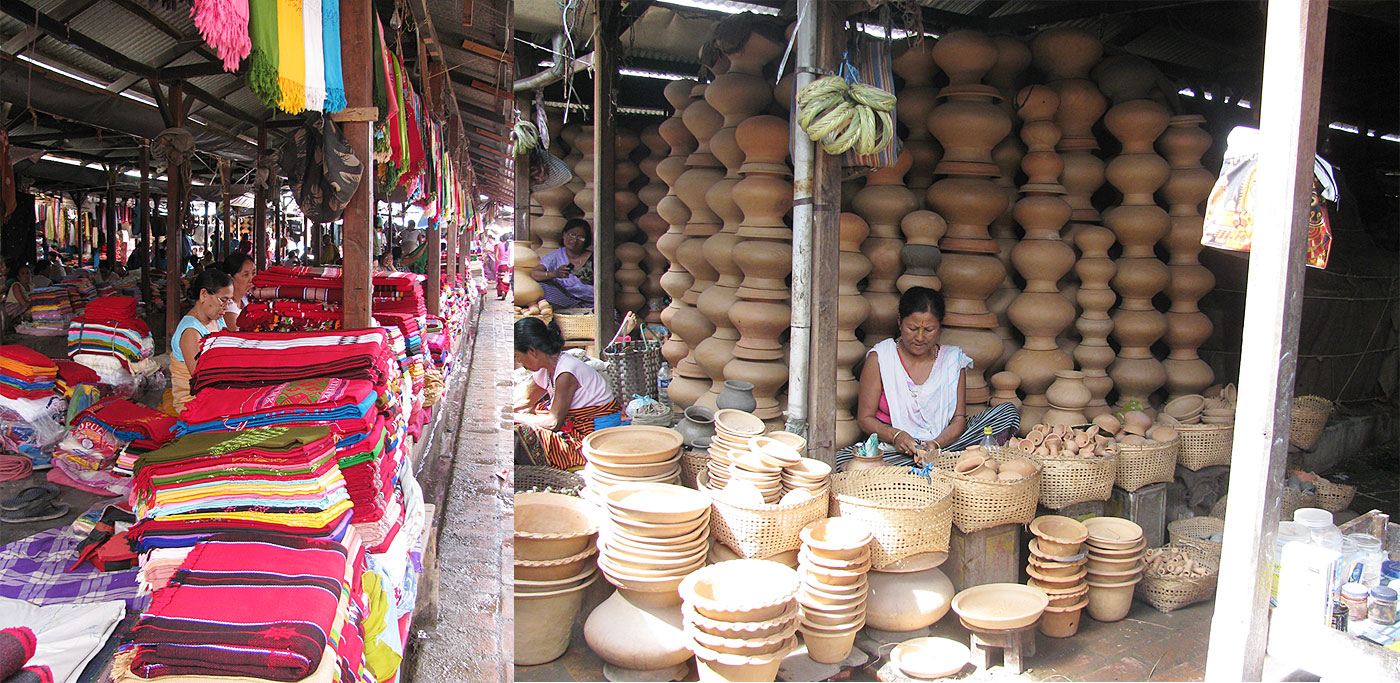
Manipur is also an ideal getaway for wildlife enthusiasts – an amazing variety of animals and birds are found in its lush terrains. These include the Hoolock Gibbon, the Sloe Loris, the Spotted Linshang, the Clauded Leopard, Barbacked Pheasant, Blyths Tragopan, and Burmese Pea-Fowl. Four different species of Hornbills, the most unique Sangai, dancing deer and a type of salamander known as 'Lengwa' found at the foothill of Siroi in Ukhrul (one of the highest hill-stations) are also part of its rich natural reserve.
Among its prime attractions is the network of water bodies in Manipur. Originating in the blue hills of the region - the Barak, Manipur and Yu rivers, criss-cross through charming landscapes while being fed by several tributaries on their course.
Lake Loktak, a very scenic destination, 48 Kms from the capital city of Imphal, is the largest freshwater lake in the region. Tourists can get fascinating glimpses of the lake from hotels and tourist bungalows situated atop the surrounding Sendra islands. The lake is strewn with a unique natural feature called, phumdis – floating islands of soil and vegetation.
The Keibul Lamjao National Park, on the southern shores of Loktak is the largest phumdis of the lake – therby making it the only floating park in the world. It is also the only remaining natural habitat of the Eld’s Deer, also called Brow-antelered deer.
A gateway to the mystical northeast, Assam is the land of the rare one-horned rhinoceros, rolling plains, lush tea gardens and diverse ethnic groups. To savour its luxurious blue hills, unique flora and fauna and the many charms of the enormous Brahmaputra, is any discerning traveller’s dream. Silhouetted by the Karbi-Anglong and Kachari hills, and strewn with many rivers and lakes, the state shares its extended borders with the Kingdom of Bhutan to the North, the six sister-states of northeast, as well as Bengal and Bangladesh.
Assam’s mythological history dates back to the era of Puranic and Tantric scriptures. King Bhagadatta, ruler of the mythical kingdom of Pragjyotishpura (now Guwahati), who was killed by Arjuna at Kurukshetra, finds mention in the epic of Mahabharata. Other Hindu texts mention the appearance of Lord Krishna in Assam as well – the lord himself had fought against King Banasura of Sonitpur (now Tezpur), when the later’s daughter Usha secretly entered into wedlock with Krishna’s grandson Anirudh.
Evidences show that King Pushya Varman (350 – 375 AD), a contemporary of Samudragupta, established the first historical kingdom of Assam, known as Kamrupa. King Pushya’s kingdom covered the entire Brahmaputra valley, parts of North Bengal and Bangladesh. Though in succeeding centuries the kingdom broke up into several smaller entities led by various ethnic groups like Ahoms, Kacharis and Chutiyas, the region was still referred to as Kamrupa by chroniclers. Later on much of Assam, which was unified under the Ahom dynasty, was torn asunder by political intrigue and conspiracy. The Burmese and British finally annexed it jointly in 1826.
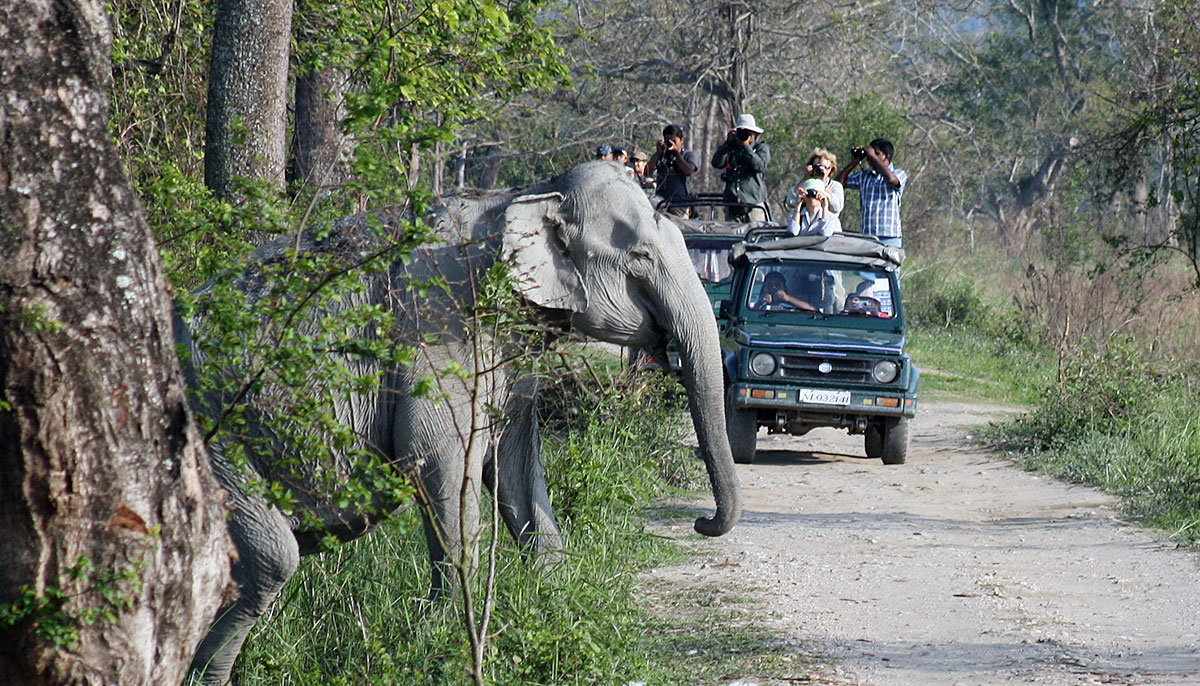
Once under British rule, Assam’s rich natural resources opened up like a Pandora’s box, where astute British entrepreneurs saw huge potential – coal, limestone and iron mines were opened, and cheap labourers brought in from neighbouring regions of Orissa, Bihar and Andhra Pradesh to start plantations of tea, rubber, hemp and jute. Today Assam is the largest producer of tea (the camellia sinuses is its indigenous variety) in the world; while it also contributes around 15 per cent to India’s crude oil production. Owing to its fertile river valleys, the state accounts for large production of rice, potato, citrus fruits, spices, orchids as well as legendary silks like Muga, Eri and Paat.
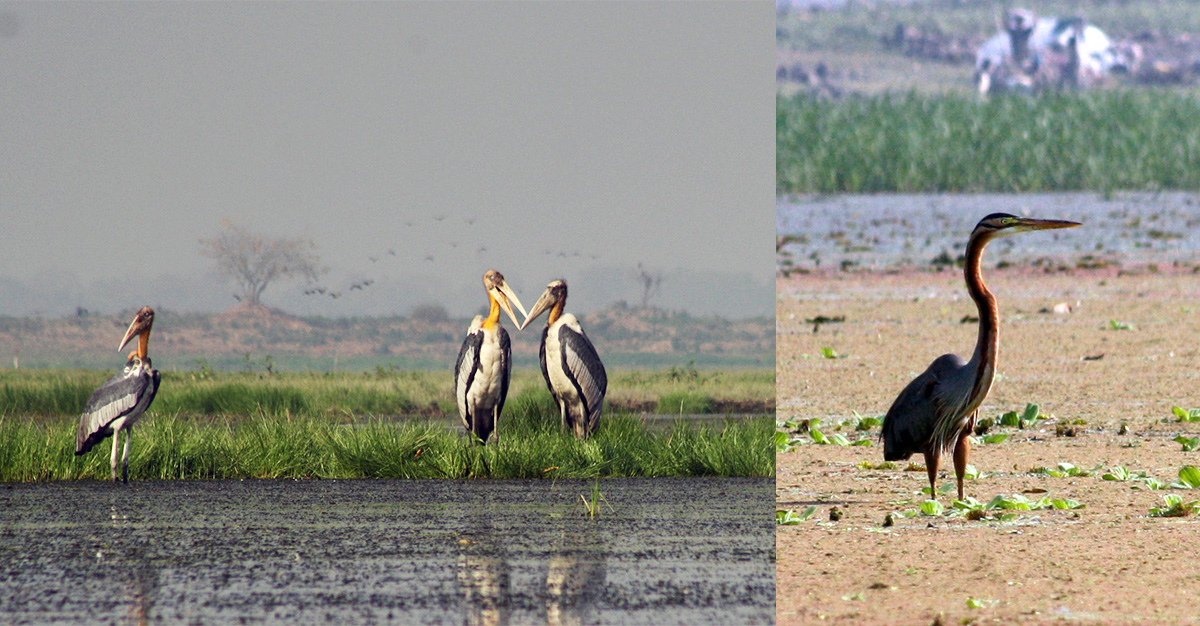
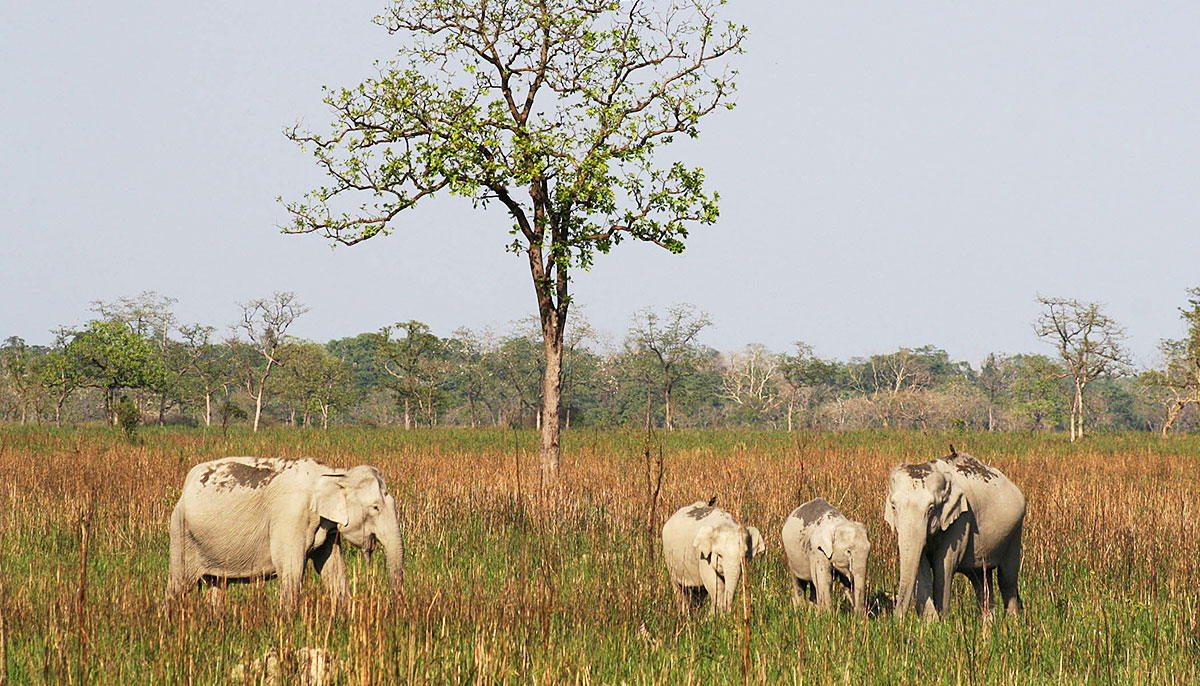
Assam’s biodiversity is its major draw – the state is a mishmash of grasslands, tropical rainforests and wetlands – each having its unique colour and character. Dense forests of sal, teak, bamboo, banyan and elephant grass inundate the valley, which is also dotted with verdant paddy fields all across. This biodiversity can be best observed in its reserve forest belts like Kaaziranga (near Jorhat), Nameri (near Bhalukpung) and Manas (Barpeta Road). Governments, conservationists and institutions like UNESCO have lauded Assam’s successful efforts at conservation of its rare species of animals and plants. The almost extinct one-horned rhino, the tiger, the asian deer or the sambhar, wild buffaloes and over 500 species of birds can be found in these belts. A UNESCO World Heritage Site, Kaaziranga boasts of having the highest density of tigers in India (current populations, thanks to the Project Tiger initiative is upwards of 100); it is also the last remaining habitat of the Asian Elephant.
The best time to witness Assam’s natural splendour is between September – March, when fleets of migratory birds and other species of animals can be spotted among its gigantic thickets of elephant grass which are ceremonially burnt around February. Also, once the monsoon sets in, animals usually cross over to the higher grounds and neighbouring hills.
Various guided tours, like elephant and jeep safaris, are organised by forest departments for tourists; while regular eco- tours and camps are held for nature and wildlife enthusiasts, bird watchers, anglers, as well as for those looking forward to get a taste of the cultural demographics. A unique initiative has been started at the Eco-Camp of Nameri National Park (Potasil) which involves local tribesmen like the Mishings, to help foster conventional farming, fishing and conservation techniques.
Assam’s rich and vast ethnic diversity is an anthropologist’s delight. There are vast populations of indigenous tribes like Karbis, Missings (also spelt as Mishing), Bodos and Kaccharis spread across the region, along with the traditional Ahoms and other Tibetan-Burmese sub-groups – each having their distinct dialects and uniquely colourful customs. The people are enmeshed in natural surroundings so their knowledge of the flora and fauna of this region is almost instinctive – you can often hear a tribal spewing out scientific names of species at random! Village tours that give a glimpse of the life of these communities are organised for tourists; just as tours of indigenous handicrafts and handloom villages where exquisite bamboo artefacts or the rich Assamese silks are made.
As tea-tourism gains ground in Assam and international tourists make a beeline to get a taste of life on India’s tea estates – more and more tea-garden owners are promoting the erstwhile colonial-style bungalows to provide the right blend of solitude and luxury amidst the verdant gardens. Here travellers can interact with plantation workers, learn about the history of tea and the various methods of production, as well as enjoy the colourful jhoomoor dance, traditionally performed by plantation workers after every harvest.
Colourful fairs, festivals and events augment Assam’s vibrant cultural and social landscape throughout the year. Come April and Assam’s numerous communities, tribes and sub-tribes, all join hands to welcome the new agricultural season through the joyous celebration of Bihu. Dressed in traditional silks, men and women partake in song and dance performances to the beat of the dhol (drum) and the melody of the pepa (flute).
Other events such as the Dehing Patkai Festival – a heady combination of ethnic fairs, adventure tours, wildlife excursions and tea-tasting tours is held annually in January.
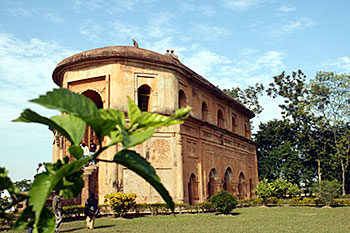
Assam is steeped in myriad religious and mythological legends. There are many destinations here considered sacred to people from various faiths, shaivites, shakti worshippers, Muslims as well as Sikhs. One such region is Majuli - world’s largest river island near Jorhat. An exotic destination nestled in the lap of the mighty Brahamaputra, Majuli has been the cradle for neo-Vaishnavite culture and learning, ever since its initiation by Assamese saint Srimanta Sankaradeva around the 15th century. This very scenic locale today houses over 15 satras or monasteries each considered a crux of Assamese art, music, dance, literature, drama and religion. The three-day long colourful Raas festival to celebrate Lord Krishna’s life is held with much fervour and enthusiasm on this island.
Tucked away in the remotest tip of northeast India is the enticingly beautiful state of Arunachal Pradesh. Literally meaning ‘land of the dawn lit mountains’ in Sanskrit, Arunachal with its captivating snow-capped peaks, silver lakes, gushing rivers, verdant landscapes and glorious heritage has become a prime destination for both Indian and international tourists. Bollywood too was spellbound by the beauty of the place and shot
Madhuri Dixit-starrer film Koyla in the breathtaking Tawang district.
In fact, it was in Tawang that the fifth Dalai Lama, Mera Lama, saw his vision to construct a monastery in 1681. It is said after praying for guidance, he found his horse standing quietly on a hilltop and took it as a divine sign. Hence the name Tawang, which means chosen by the horse.
Arunachal Pradesh attained complete statehood on 20th February 1987 as part of the Indian union. At 83743 sq. kms, the state shares a long international border with Bhutan to the west (160 km), China to the north (1,080 km) and Myanmar to the east (440 km). The McMohan Line separating the state from China has evolved into a major political issue, owing to China’s claims of Arunachal being a part of their land. It is due to this unrest that entry into this exotic land is allowed after tight security clearances. Itanagar is the state capital of Arunachal.
Our ancient mythology however, has several mentions of the land of Arunachal in texts like the Mahabharata and Kalika Purana. Legend has it, that it was here that Parashuram washed away his sins; that sage Vyasa meditated in its serene milieu and that the Prabhu Mountains mentioned in the Puranas belongs to this region. The Parashuram-kund and the 400 year-old Tamang Monastery; and several other archaeological remains are testimony to this grand-old heritage of the land – just as are the several indigenous tribes of the state.
Arunachal is today home to over 20 major tribes and sub-tribes of Mongoloid origin – who can be further categorised according to their socio-religious affinities. Prominent groups among these are -
The Monpas and Sherdukpens of Tawang and West Kameng districts - known for their religious practises they are staunch followers of the lamaistic tradition of Mahayana Buddhism; and their villages usually have a series of richly decorated Buddhist ‘gompas’. Though chiefly agriculturalists, a large number of these people breed mountain sheep and yak. Believed to have migrated from Thailand and Burma, centuries ago, they use a distinct ancient script, which has been sourced, to their original homelands.
The second major group of people are myriad tribes like Adis, Akas, Apatanis, Bangnis, Nishis, Mishmis, Mijis and Thongsas, who worship nature deities like Donyi-Polo, the Sun god and Abo-Tani, the Moon God - also believed to be the original ancestors for most of these tribes.
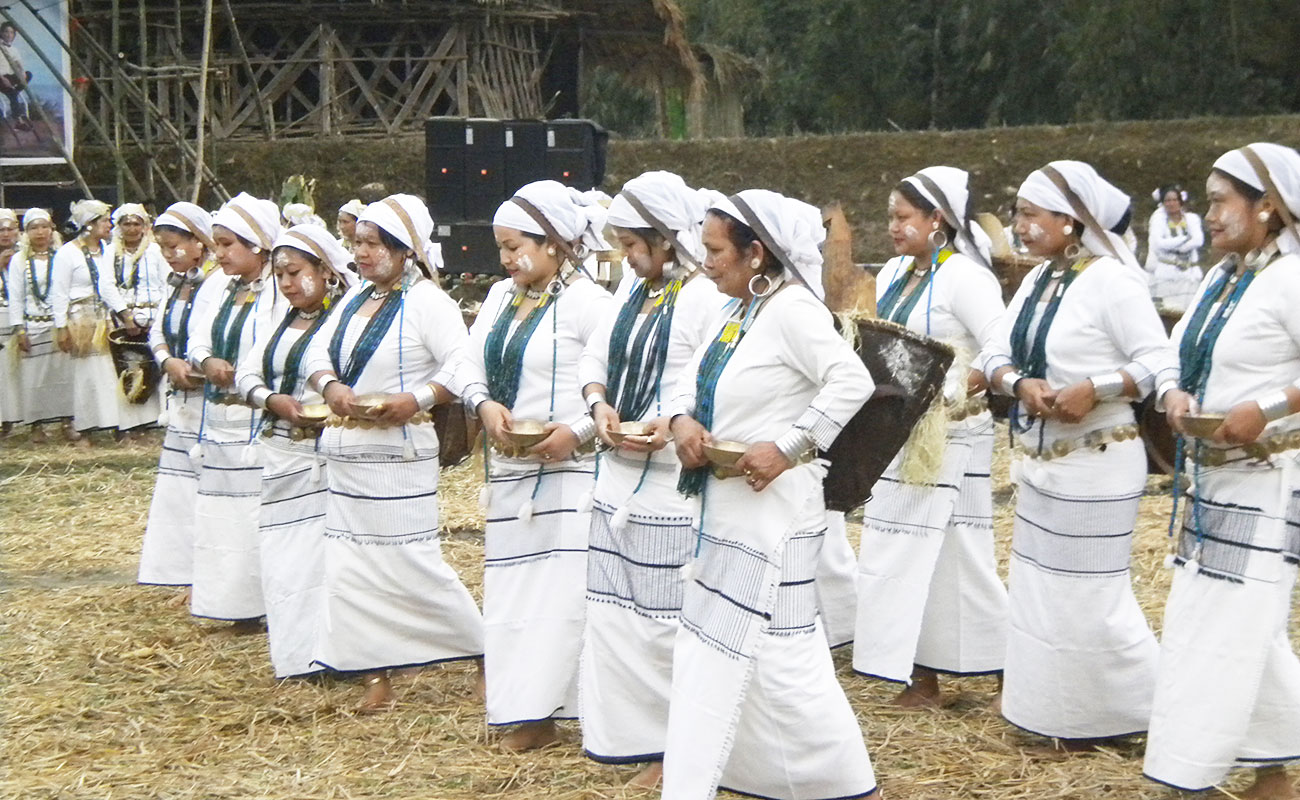
Some distinct characteristics define each of these tribes – among the Adis for example polygamy is still common and their traditional dance, the ‘ponung’ is popular throughout the state. While, rich body tattoos, nose rings and hair buns are the distinguishing traits of the Apatanis. The Hrussus on the other hand, follow both Hindusim and Buddhism and are very good tradesmen selling swords, cloth and blankets. Mishmi women are known to produce excellent weaves, as well as coats and blouses. Among Membas and Khambas of west Siang, polyandry is very common; while Singphos, the expert blacksmiths believe in a host of spirits as well as in Buddhism. The one common factor among all these tribes is their well-defined and exceptionally organised systems of self-governing village units.
The third group comprises of Noctes and Wanchos, who inhabit the Tirap area – their village societies follow a strict hierarchical system where the village chief plays a significant role. Noctes and Wanchos are believers of elementary Vaishnavism.
Being an agrarian society, a large number of festivals celebrating a good harvest are common during the months between September and March. Losar the New Year festival of Monpas lasts for almost 15 days; while Mishmis celebrate the Tamladu for protection of crops, animals and as a guard against natural calamities. Sangken, the annual ritual of bathing Lord Buddha is organised by the Khampti tribe. Animal sacrifices, rhythmic beats and dances, intricate and colourful costumes and lots of food and drinks are part and parcel of these festivals.
Arunachal is a nature’s treasure trove – wild and exotic orchids laden throughout the state, abundance of bamboo and cane, lush meadows and tropical forests fill its every nook and cranny to profusion. The best time to savour Arunachal’s phenomenal landscapes as well as its salubrious climes is between September – April.
Bomdila a prominent hill-station fascinates tourists with its snow-capped peaks and apple orchards. Its intricately designed local carpets are a must-buy, while places such as the Tipi orchid garden and Dirang are prime attractions located near Bomdilla. Accommodation in Bomdilla includes hotels like Circuit House, Tourist Lodge, Hotel La and Hotel Sweet.
Bomdila is also the only existing route through which one can reach the legendary Tawang monastery of the Mahayana sect. Inhabited by the Monpa tribe, the area of Tawang borders Tibet have some of the most exotic lakes in this part of the country – prominent among these are the Pankang Teng Tso and Sangetser lakes. Nearby the Sela Pass, offers some majestic views of the Himalayas as well as the verdant hills. The Circuit House, Inspection Bungalow, Hotel Nichu and Hotel Shangrila provide the best accommodations in this area.
For lovers of adventure tourism Arunachal provides some fine options. The Bomdila to Tawang stretch is popular with trekkers; which offers enough challenge through some craggy hilly terrains, while also offering fascinating views of waterfalls and forests.
River Rafting along Kameng (Seppa- Bhalukpung), Subansiri (Taliha- North of Daporijo), Siang (entire course) is also popular among rafters.
Wildlife in Arunachal is an altogether different experience. The famous Namdapada Wildlife Sanctuary, few kilometres from Miao, in Changlang district, provides an apt habitat for a great variety of species including the red panda, majestic gaur and musk deer, elephant, Himalayan black bear, takin, the wild goat peculiar to the Patkoi range, slow loris, binturong as well tigers. Largely inaccessible because of its varying altitudes, the best time to visit here is between October and April. The area offers many hotels and lodging facilities.
Arunachal’s religious and archaeological wonders are strewn throughout the land. Parashuramkund (lohit district) and Akashi Ganga are prominent religious centres for Hindus. Sites like Malinithan, which is a temple in ruins at the foot of the Siang hills has unearthed a valuable history of ancient civilizations, religions and languages. Dedicated to Durga, there are several sculptures of gods of the Hindu pantheon including Nandi and Surya. Bhismaknagar in the Dibang valley is a symbol of ancient tribal and Aryan way of life.
Featured Photo: Aborcountry Travels & Expeditions