Northeast Odyssey
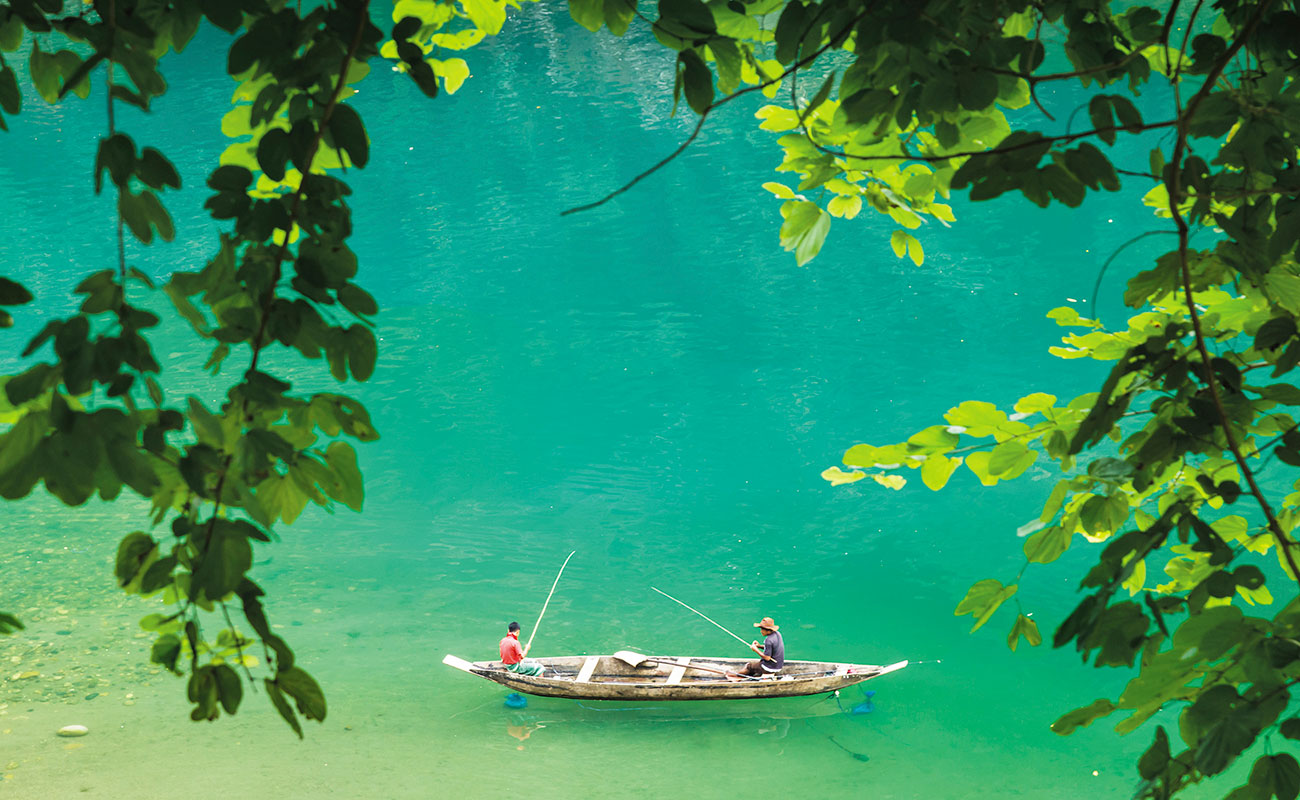
The land of cascading waterfalls, intriguing caves, rolling plans and incessant rains – Meghalaya, literally meaning the ‘abode of clouds’, is home to the legendary Garo, Khasi and Jaintia tribes. Formerly a part of Assam, it gained statehood as part of the Indian Union in 1972. Spread over an area of 22, 429 square kilometres, the state is bounded by Assam to the north and Bangladesh to the west.
A much loved destination for writers and music lovers alike, the capital city, Shillong, is where Nobel laureate Rabindranath Tagore chose for his many sojourns, while author Nirad C Choudhuri mentioned extensively in his book The Autobiography of an Unknown Indian’. In fact, today, Shillong is the music capital of Northeast with many home-grown singers and rock bands making it a lively state. It has hosted some of the major rock concerts held in the recent past by international groups and artistes like MLTR, Scorpions, Air Supply, Eric Martin and Petra. It is also home to one of the most natural and largest courses in Asia, the Gleneagles of the East.
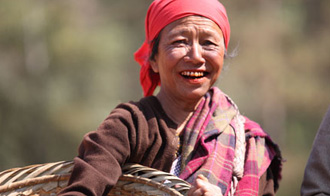
Some of the earliest group of ethnic settlers in the Indian subcontinent – the Garo, Khasi and Jaintias settled in eastern Meghalaya centuries ago. Together these communities make up, what is known as the Hynniewtrep people - belonging to the Proto Austroloid Monkhmer race. Known as cheerful and hospitable people - the common distinguishing factor among these groups is their tradition of matrilineal system of society, where the family lineage is attributed to the mother’s side. It is worth noting that around 73% of people of the state have shown an inclination to beget a girl child – much higher than the national average; and in a nation where having a male heir is still considered a boon.
God fearing and simple, a host of distinct customs define their social and religious characters. Khasis believe in the existence of one supreme God, their creator 'U Blei Nongthaw'; while Garos call their supreme entity Raguba. Belief in good and ominous spirits is very common among these tribes, and forms part of certain religious customs -like appeasing these spirits for better harvest or a good rainfall. Though largely followers of such animistic forms of religion – a number of these communities have now adopted Hinduism Islam or Christianity as well.
The festival calendar of Meghalaya is primarily dominated by the colourful celebrations of these communities.
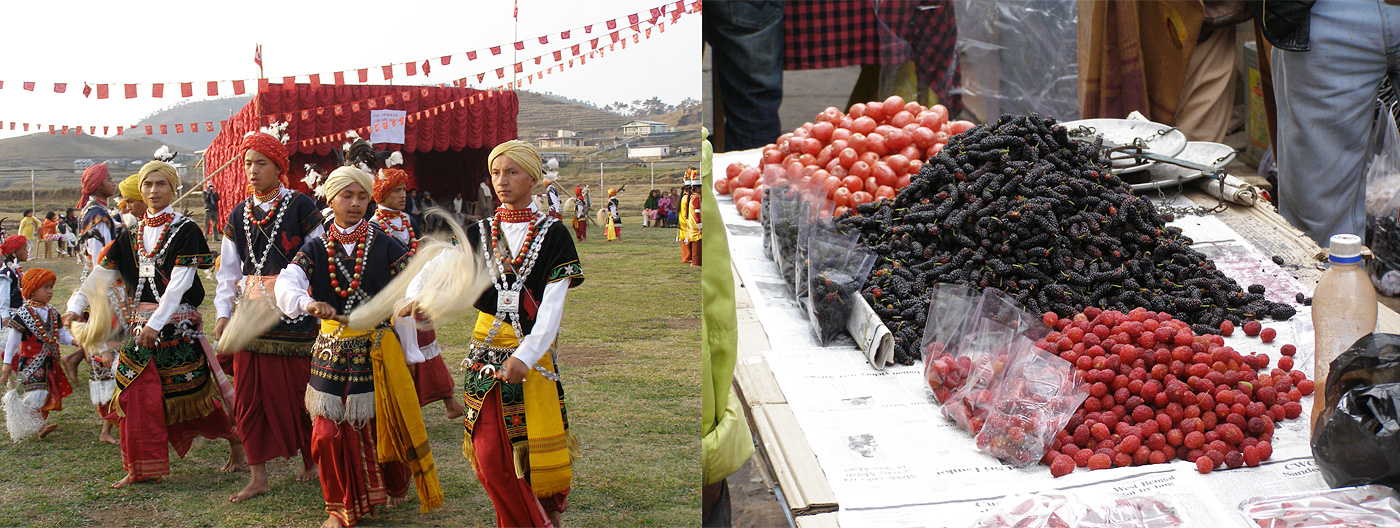
Among the Khasis, the annual Nongkrem Dance held at Smit (every autumn) associated with goat sacrifice, is held with much pomp and gaiety. The ritual involves a traditional dance performed is by the Syiem, the head of the Khasi state, and Ka Syiem Sad, the Syiem priestess (considered caretakers of all religious ceremonies); and the ministers and the common people.
The Garo Hills come alive to the beat of the nagara (drums) every November when the community partakes in a post-harvest festival called Wangala. On the occasion Garos thank their god of fertility, Misi-A-Gilpa-Saljong-Galapa. The highlight of the festival is a performance by 300 dancers and 100 drumbeaters who descend on the field in their fineries.
A three-day long festival of the Jaintias, known as Behdeinkhlam is held to drive away evil spirits with waving of sticks and the beating of drums. Also, the Pnar people hold the annual Chad Sukra, meaning sowing festival, between April and May every year.
Various other festivals like the autumn festival, the strawberry and Ranikor festivals draw large crowds from various parts of the state, as well many international tourists. Other groups like the Rabha, Mikir, Koch and Nepalis have their unique cultural events as well.
The entire Meghalaya plateau region is made of rich rock formations, which are a great storehouse of natural minerals like coal, limestone, uranium. The Garo, Khasi and Jaintia hills are a part of this region itself. Several rivers, deep gorges and forests define this hill region. The central part of the plateau comprising the Khasi Hills has the highest elevations – Shillong Peak is its highest point; while the highest point in the Garo hills is the Nokrek Peak at an altitude of 1515 m. The town of Cherapunji, a famous tourist destination, in the Khasi Hills, holds the world record for the highest rainfall in a month.
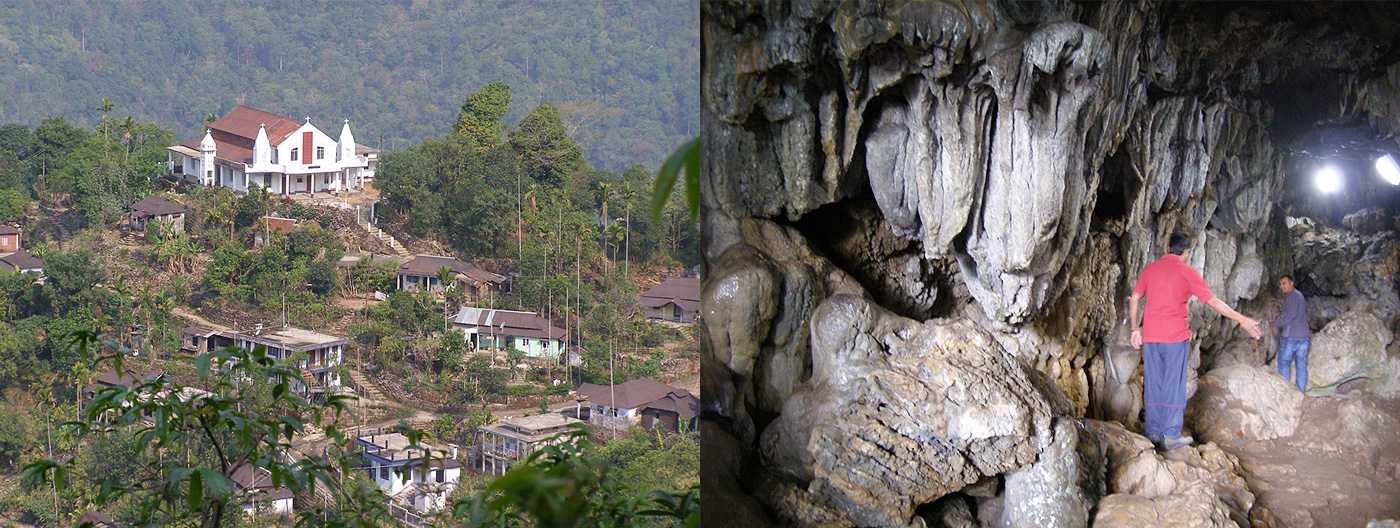
Rain awashed Meghalaya is a nature’s paradise – approximately 42. 34% of the total area of the state is forested. These sub-tropical forests have some of the richest faunal diversity and botanical habitats in Asia; and offer rich opportunities for eco-tourism as well.
It’s ancient forests or ‘sacred groves’ have been preserved for centuries by its indigenous people – an ideal destination for nature worshippers, these areas harbour some of the rarest species of plants and flowers. Generally rimmed by a dense growth of Castanopsis kurzii trees, the areas inside is loaded with varieties of aroids, pipers, ferns, fern-allies and orchids. The Mawphlang sacred forest in the east Khasi hills is a prominent sacred grove here.

Meghalaya has been gifted with stunning natural wonders. Where else would you find caves with such depth and length, as we do here? Owing to the climate, we have the best wines which are not known to outsiders.
The cleanest village in Asia, Mawlynnong, about 100 kms from Shillong, is our pride. I would urge every visitor to go and not just see, but to also come back with the inspiration to keep their own respective backyards clean.
Shillong is a hawker’s paradise. All through the streets- be it in Laban, Police Bazar and Laitumkhrah, locals sell fresh produce like fruits and exotic vegetables.
It’s such a delight to see how much of what grows in our soil is being exhibited. Try and reach there in the morning, to witness the buzz and spirit of the place.
When it comes to restaurants, one can find quite a few good ones in Shillong that are definitely outstanding. There’s a notable focus on organic produce and the countryside – a possible testament to the local’s love for good quality food. I would recommend local food and Shillong-style Chinese cuisine.
Plan your trip to coincide with the annual celebration of Bob Dylan's birth anniversary. Come and be a part of the musical fiesta on 24th May every year – we have live gigs, and the mood is more than just musical. The experience is epic since I first started in 1972!
Lou Majaw